- Curiosity Logs Newsletter
- Posts
- The founders : Chronicles of Silicon Valley's Founders
The founders : Chronicles of Silicon Valley's Founders
Book snippets from The founders by Jimmy Soni , story of PayPal founders including Peter Thiel, Elon Musk, Reid Hoffman, and Max Levchin. Also read about The Secret to Building Reading Habit
Hello Curious Minds,
In this week's edition of Curiosity Logs, we will discuss
Weekly Book Highlights from The Founders: The Story of Paypal and the Entrepreneurs Who Shaped Silicon Valley by Jimmy Soni
The Secret to Building a Lasting Reading Habit
Top 7 issues so far..
In case you have missed previous issues, please check out these popular ones
📚 Weekly Book Highlights
The Founders by Jimmy Soni
In this week's edition of Curiosity Logs, we're delving into the riveting narrative of "TheFounders: The Story of Paypal and the Entrepreneurs Who Shaped Silicon Valley" by Jimmy Soni.
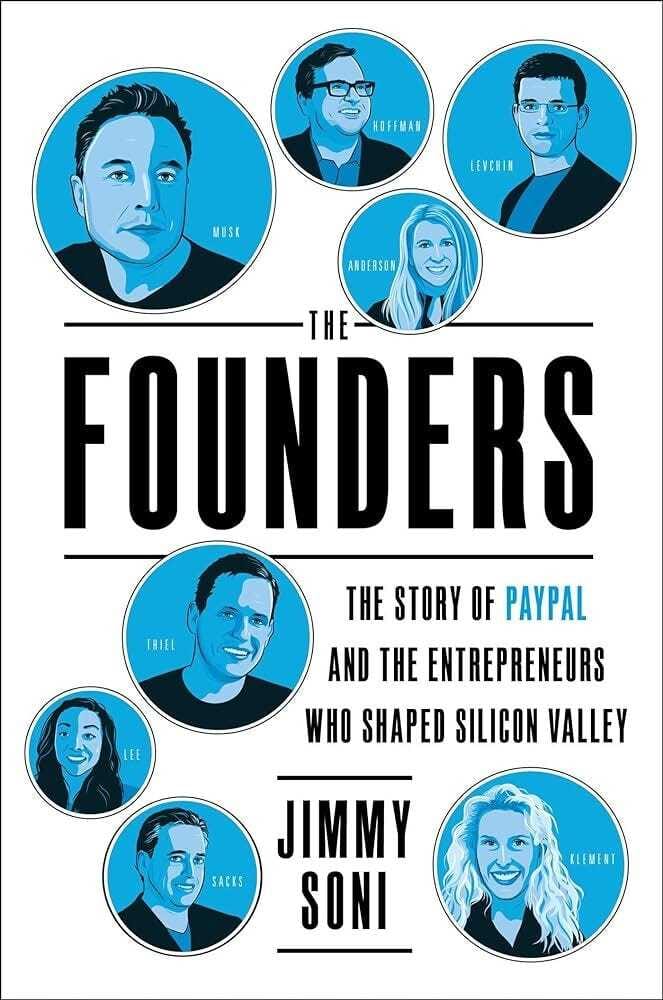
Join me as we uncover captivating snippets and untold stories from Soni's exploration of the birth of PayPal and the visionary minds behind it.
From breakthrough innovations to the trials and triumphs of entrepreneurship, "TheFounders" offers invaluable insights into the dynamic landscape of Silicon Valley.
Here is 15 interesting snippets from the book👇
“PayPal Mafia.” Several billionaires and many multimillionaires have emerged from PayPal’s ranks; the group’s combined net worth is higher than the GDP of New Zealand.
Musk had learned that start-up success wasn’t just about dreaming up the right ideas as much as discovering and then rapidly discarding the wrong ones.
Too much precision in early plans, he believed, cut that iterative loop prematurely.
in a team, an n-squared communications problem emerges. In a five-person team, there are something like twenty-five pairwise relationships to manage and communications to maintain.”
“Things happen on the internet like a snowball effect. It rolls quickly. It went from nobody really knowing about websites to everybody knowing about websites in what seemed like a year,”
‘If they don’t like the way I dress… they’re not going to like my product—and it’s the product that’s going to get them to invest, not the way I look.’ ” …….“If you’ve got something that’s important, people are going to want it—it doesn’t matter what you look like.”
“We would show people the hard part—the agglomeration of financial services—and nobody was interested. Then we’d show people the email payments—which was the easy part—and everybody was interested,” Musk explained in a 2012 commencement speech at CalTech. “So I think it’s important to take feedback from your environment. You want to be as closed-loop as possible.”
it was really important that we not squander our precious engineering bandwidth on ideas that didn’t make sense for the long-term strategy of the company.”
Technology thinkers frequently urged founders to build companies that solved problems in their own lives, but X.com’s and Confinity’s eBay-driven success offered a powerful counterpoint: solving a problem could be just valuable as solving your problem.
Metcalfe’s Law. Devised in the 1980s by Robert Metcalfe, the inventor of Ethernet, the basic idea was simple: The value of a network grows by the square of the size of the network.
Elon saying one thing which was like, ‘If you can’t tell me the four ways you fucked something up… before you got it right, you probably weren’t the person who worked on it,’ ” Giacomo DiGrigoli recalled.
“Freemium developers act just like cocaine dealers,” he wrote. “They give the basic services for free and charge you when you ask for more.”
“The onset of the freemium model is probably the best thing that has ever happened to the world wide web.”
Musk thought about currencies “from an information theory standpoint,” a reference to the field founded by Dr. Claude Shannon in 1948. “Money is an information system,” he explained.
“If you’re not redlining enough that you don’t have some failures you’re learning from,” Hoffman observed, “then you’re probably not learning at a fast enough speed.”
P.S. I’d love to know: What is the single snippet above that sounds most interesting or impactful to you? Share in comments or reply this email.
The Secret to Building a Lasting Reading Habit (It's Not What You Think!)
For years, I struggled to develop a consistent reading habit. I tried various strategies, from setting strict schedules to forcing myself through uninteresting books. But nothing seemed to work until I uncovered the biggest obstacle for beginners: bad book choices.
1. The root cause of many failed reading habits is not a lack of time or interest but selecting the wrong books. Start with easy and enjoyable reads that naturally captivate you.
2. Don't be afraid to drop a book that fails to hold your attention after a few chapters. Forcing yourself through a dull read will only breed resentment and demotivation.
3. Once you've built momentum by finishing 2-3 books over 90 days, you'll develop a habit that empowers you to tackle any book you've dreamed of reading, no matter the difficulty.
Building a lasting reading habit is about finding the right entry point, not pushing through sheer willpower. Start with books you genuinely enjoy, and you'll soon find yourself craving that feeling of immersion and growth.
Who's ready to embark on a liberating reading journey by embracing the power of choice?
PS : Looking for Book Recommendations? Follow me on LinkedIn