- Curiosity Logs Newsletter
- Posts
- The Coming Wave: Preparing for Tomorrow’s Digital Revolution
The Coming Wave: Preparing for Tomorrow’s Digital Revolution
How emerging technologies will reshape our world—and how we can navigate the wave.
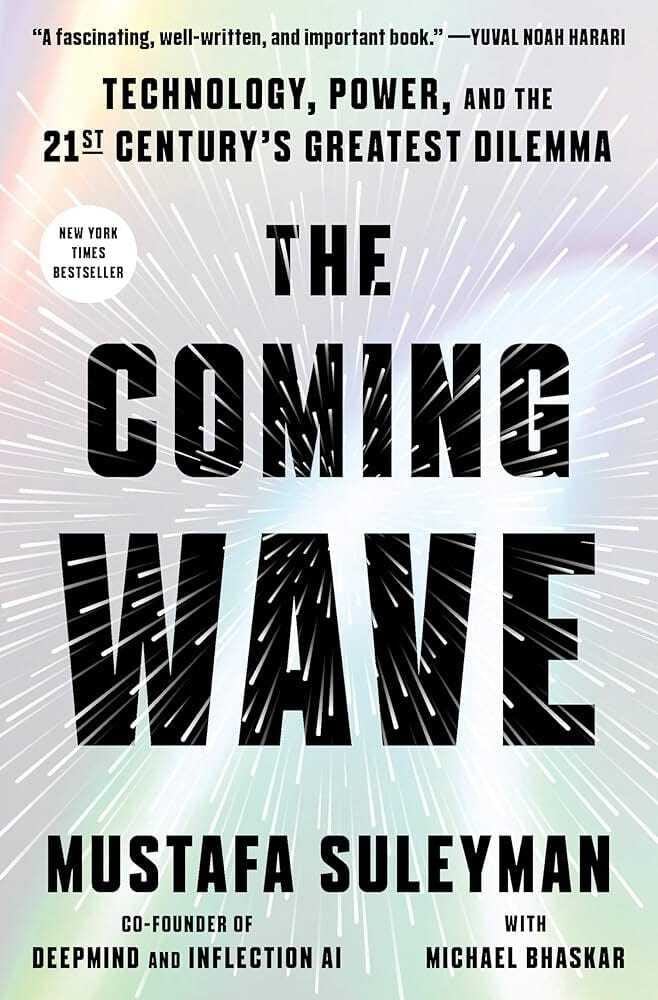
This week, I’m sharing snippets from The Coming Wave by Mustafa Suleyman.
This thought-provoking book explores the transformative power of AI and other disruptive technologies, delving into how they will reshape industries, societies, and even our personal lives.
Mustafa Suleyman is a co-founder of DeepMind, a pioneering artificial intelligence company, and a leading voice in the AI community. Known for his expertise in AI ethics and innovation, Suleyman combines deep technical knowledge with a practical approach to addressing the profound impact of emerging technologies.
In this book,With a balanced view on the promises and perils of these advancements, Suleyman offers a roadmap for navigating the challenges of an increasingly digital future.
Here is 12 interesting snippets on the coming wave of technology from the book
The discovery of fire, the invention of the wheel, the harnessing of electricity—all of these were moments that transformed human civilization, altering the course of history forever.
Humanity’s quest to improve—ourselves, our lot, our abilities, and our influence over our environment—has powered a relentless evolution of ideas and creation.
the entirety of the human world depends on either living systems or our intelligence.
The coming wave is defined by two core technologies: artificial intelligence (AI) and synthetic biology.
Today, AI systems can almost perfectly recognize faces and objects. We take speech-to-text transcription and instant language translation for granted. AI can navigate roads and traffic well enough to drive autonomously in some settings. Based on a few simple prompts, a new generation of AI models can generate novel images and compose text with extraordinary levels of detail and coherence.
AI systems can produce synthetic voices with uncanny realism and compose music of stunning beauty. Even in more challenging domains, ones long thought to be uniquely suited to human capabilities like long-term planning, imagination, and simulation of complex ideas, progress leaps forward.
attempting to ban development of new technologies is itself a risk: technologically stagnant societies are historically unstable and prone to collapse. Eventually, they lose the capacity to solve problems, to progress.
Even as we worry about their risks, we need the incredible benefits of the technologies of the coming wave more than ever before.
Over the next few decades, I argued, AI systems would replace “intellectual manual labor” in much the same way, and certainly long before robots replace physical labor.
The presenter showed how the price of DNA synthesizers, which can print bespoke strands of DNA, was falling rapidly.
manufacture—DNA. And all this is now possible for anyone with graduate-level training in biology or an enthusiasm for self-directed learning online.
pessimism-aversion trap: the misguided analysis that arises when you are overwhelmed by a fear of confronting potentially dark realities, and the resulting tendency to look the other way.
Wait for more interesting snippets from this book in coming issues…..
P.S. I’d love to know: What is the single snippet above that sounds most interesting or impactful to you?