- Curiosity Logs Newsletter
- Posts
- Surviving 'The Coming Wave': Can We Control Innovation?
Surviving 'The Coming Wave': Can We Control Innovation?
Why the Fastest-Growing Technologies Are Hard to Control? Prediction and analysis from "The Coming Wave" by Mustafa Suleyman

Jithin VMadathil
March 28, 2025
This week, I am sharing snippets from The Coming Wave by Mustafa Suleyman. The book explores how powerful technologies—AI, biotech, and beyond—are advancing faster than ever and outpacing our ability to control them.
In this issue, we’ll dive into the key ideas from the book, including the nature of technological waves, their profound impact on society, and what history teaches us about adapting to unstoppable innovation.
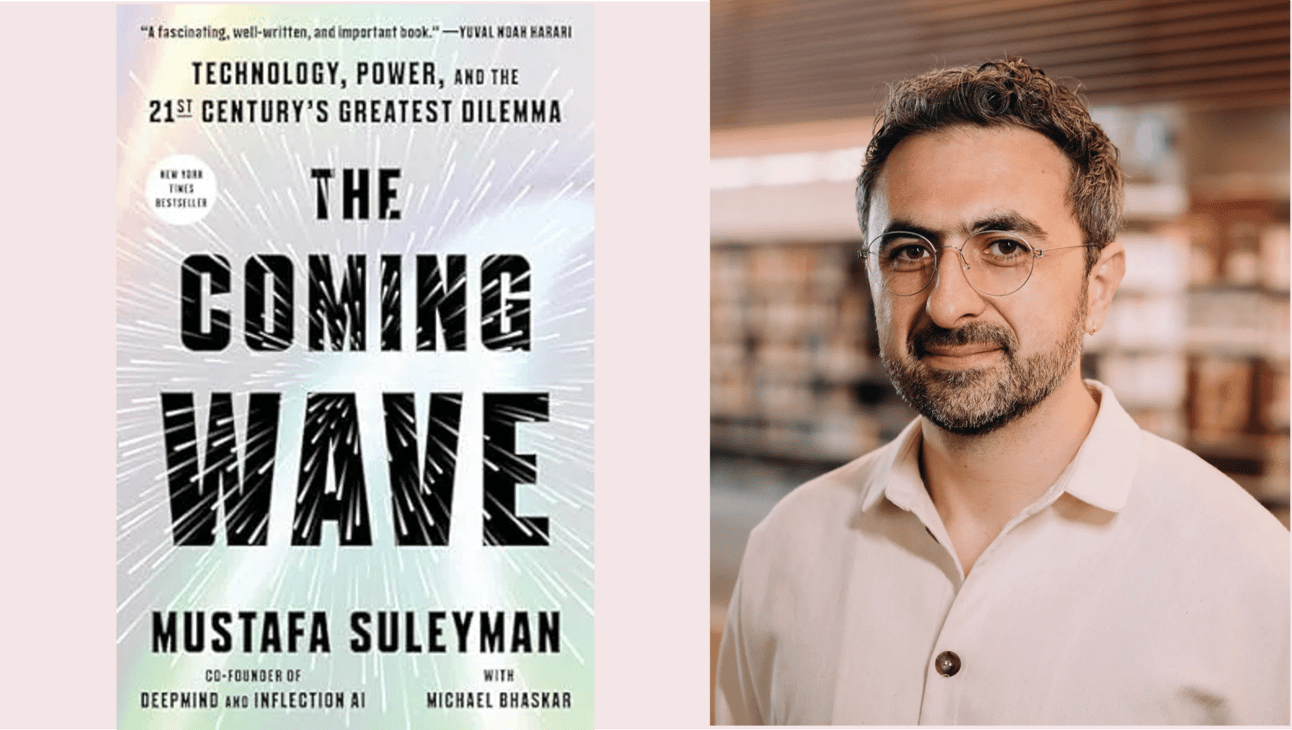
Mustafa Suleyman is a British entrepreneur, AI researcher, and co-founder of DeepMind, one of the world’s leading artificial intelligence companies.
He played a key role in developing cutting-edge AI technologies and later led AI policy initiatives at Google.
In The Coming Wave, he explores the rapid rise of transformative technologies and the challenges they pose to society, governance, and global stability.
Suleyman introduces the containment problem: How do we manage and regulate these transformative forces before they become uncontrollable?
Here is 12 snippets from the book that will make you think about future of AI
call this “the containment problem.” How do we keep a grip on the most valuable technologies ever invented as they get cheaper and spread faster than any in history?
The various technologies I’m speaking of share four key features that explain why this isn’t business as usual: they are inherently general and therefore omni-use, they hyper-evolve, they have asymmetric impacts, and, in some respects, they are increasingly autonomous.
In the early nineteenth century, the railway revolutionized transport, its biggest innovation in thousands of years, but most journeys could never be taken by rail, and those that could weren’t very personalized.
The previously challenging notion of moving from place to place in search of prosperity or fun became a regular feature of human life.
Technology has a clear, inevitable trajectory: mass diffusion in great roiling waves.
So, what is a wave? Put simply, a wave is a set of technologies coming together around the same time, powered by one or several new general-purpose technologies with profound societal implications.
By “general-purpose technologies,” I mean those that enable seismic advances in what human beings can do.
Humans are an innately technological species. From the very beginning, we are never separate from the waves of technology we create.
cooking food meant faster release of its energy, allowing the human digestive tract to shrink and the brain to enlarge.
We are not just the creators of our tools. We are, down to the biological, the anatomical level, a product of them.
The irony of general-purpose technologies is that, before long, they become invisible and we take them for granted. Language, agriculture, writing—each was a general-purpose technology at the center of an early wave.
Most people in technology are stuck in the minutiae of today and dreaming of tomorrow. It is tempting to think of inventions in discrete and lucky moments.
P.S. I’d love to know: What is the single snippet above that sounds most interesting or impactful to you?