- Curiosity Logs Newsletter
- Posts
- The Mentorship Shortcut: Lessons from Smartcut
The Mentorship Shortcut: Lessons from Smartcut
What sets successful mentoring apart from ineffective arrangements.

Jithin VMadathil
May 09, 2025
This week I am sharing snippets from Smartcuts by Shane Snow, focusing on the power of mentorship.
Mentorship has been the hidden accelerator behind many of history’s highest achievers—but not all mentorship is created equal.
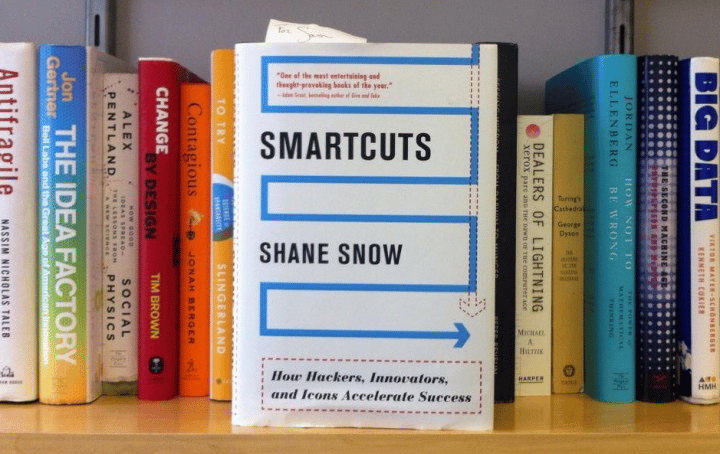
This week, we look at why organic, personal connections with mentors matter more than formal pairings, and how the right kind of guidance can shape not just your practice—but your entire journey.
Shane Snow is a journalist, entrepreneur, and bestselling author known for his work on innovation, storytelling, and accelerated learning.
He co-founded Contently, a platform that connects brands with content creators, and has written for publications like Wired and Fast Company.
Through his books, he explores how unconventional thinking can lead to extraordinary success.
Here is 12 snippets from the book on mentorship and how it can make your journey to success faster
Mentorship is the secret of many of the highest-profile achievers throughout history.
DATA INDICATES THAT those who train with successful people who’ve “been there” tend to achieve success faster.
winning formula, it seems, is to seek out the world’s best and convince them to coach us.
one-on-one mentoring in which an organization formally matched people proved to be nearly as worthless as a person having not been mentored at all.
when students and mentors came together on their own and formed personal relationships, the mentored did significantly better, as measured by future income, tenure, number of promotions, job satisfaction, work stress, and self-esteem.
There’s a big difference, in other words, between having a mentor guide our practice and having a mentor guide our journey.
She develops personal relationships with her mentors, asks their advice on other aspects of life, not just the formal challenge at hand. And she cares about her mentors’ lives too.
It’s the key, he says, to developing a deep and organic relationship that leads to journey-focused mentorship and not just a focus on practice. Both the teacher and the student must be able to open up about their fears, and that builds trust, which in turn accelerates learning.
That trust opens us up to actually heeding the difficult advice we might otherwise ignore. “It drives you to do more,”
The best mentors help students to realize that the things that really matter are not the big and obvious.
but he had books from which he could get an inkling about what those kinds of mentors were like. With every increase in communication, with every autobiography published, and every YouTube video of a superstar created, we increase our access to the great models in every category. This allows us to at least study the moves that make masters great—which is a start.
successful mentees in this chapter succeeded in the long run is that mentors who were invested in their success, who showed vulnerability and cared enough to tell them what they didn’t want to hear when they needed to hear it, forced them to examine success-crucial details more closely than they might have on their own.
P.S. I’d love to know: What is the single snippet above that sounds most interesting or impactful to you?