- Curiosity Logs Newsletter
- Posts
- Is Your Avatar Ready? A Sneak Peek into the Metaverse with Matthew Ball
Is Your Avatar Ready? A Sneak Peek into the Metaverse with Matthew Ball
How the VR technology and metaverse will change the future and what are the technological challenges to reach there, book snippets from Metaverse by Mathew Ball and some tips to read more books
Hello Curious Minds,
In this week's edition of Curiosity Logs, we're immersing ourselves in the transformative realm of the metaverse with insights from "Metaverse" by Matthew Ball. From virtual economies to immersive experiences, "Metaverse" offers a glimpse into the limitless possibilities of this digital frontier.
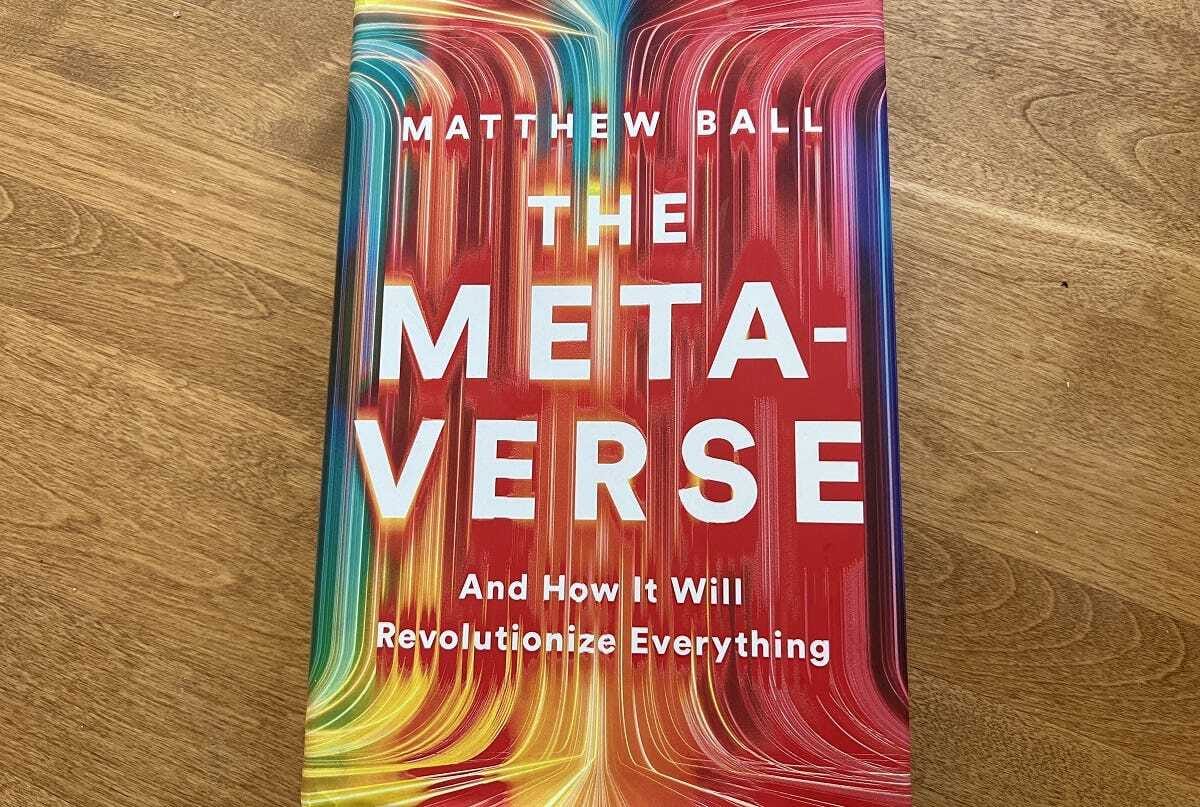
Join me as we uncover captivating snippets and visionary perspectives from Ball's exploration of the metaverse—a virtual universe poised to revolutionize how we live, work, and play.
Jensen Huang, CEO and founder of computing and semiconductor giant Nvidia, had told investors that “the economy in the Metaverse . . . [will] be larger than the economy in the physical world”†
The mobile internet has existed since 1991, and was predicted long before. But it was only in the late 2000s that the requisite mix of wireless speeds, wireless devices, and wireless applications had advanced to the point where every adult in the developed world—and within a decade, most people on earth—would want and be able to afford a smartphone and broadband plan.
“This Metaverse is going to be far more pervasive and powerful than anything else. If one central company gains control of this, they will become more powerful than any government and be a God on Earth.”
A “corporate internet” is the current expectation for the Metaverse…it is being pioneered and built by private businesses, for the explicit purpose of commerce, data collection, advertising, and the sale of virtual products.
Metcalfe’s Law, for example, states that the value of a communication network is proportional to the square of the number of its users
What makes technological transformation difficult to predict is the reality that it is caused not by any one invention, innovation, or individual, but instead requires many changes to come together. After a new technology is created, society and individual inventors respond to it, which leads to new behaviors and new products, which in turn lead to new use cases for the underlying technology, thereby inspiring additional behaviors and creations. And so on.
In 1950, IBM’s product planning department reportedly spent the entire year “insisting that the market would never amount to more than about eighteen computers nationwide.” Why? Because the department could not imagine why anyone would need such devices, except to use the software and applications IBM was developing at the time.
The only way to prepare for what is coming is to focus on the specific technologies and features that together comprise.
should also note that no part of the Metaverse requires an immersive virtual reality or VR headset….Arguing that immersive VR is a requirement for the Metaverse is similar to arguing that the mobile internet can only be accessed via apps, thereby excluding mobile browsers.
immersive 3D requires far more intensive computing power than 2D…..the average user can’t afford the GPUs or CPUs used by a corporation.
the computational, network, and hardware demands of the Metaverse will be unprecedented.
Most participants in the Metaverse would rather teleport from destination to destination.
synchronous online experiences are perhaps the greatest constraint facing the Metaverse today—and the one that is hardest to solve.
Anyone who wants the Metaverse to exist—and even those who don’t—should want the Metaverse to be driven by (and primarily benefit) these groups rather than by megacorporations.
US Secretary of Commerce Don Evans stated “yesterday’s supercomputer is today’s PlayStation.”
P.S. I’d love to know: What is the single snippet above that sounds most interesting or impactful to you?
Weekly Curiosity Corner
I always used to get stuck in middle of a book, and then stop reading altogether.Then I found a work-around which helped me read 90+ book last 3 years.How? -> Read books in parallel.When get stuck in a book, start the next one➡ Here is my playbook for reading more📖 Create list of books I want to read and purchase them📖 Start with a book. Read it till you get stuck📖 Start next book (preferably from different genre)Now try multiplexing based on your mood. Or just continue with second one.PS : Did you ever try reading two books in parallel? Its very liberating and helps you read more